Approval Workflows: A Guide for Multifamily

Adam Cowley
CEO
Key takeaways
- Manual approval processes — like 9-page PDF vendor packets sent over email — are slow, error-prone, and rarely followed consistently.
- Automated workflows replace manual steps with mandatory fields, validated inputs, and conditional logic that enforces the process by design.
- A standard approval chain runs from request submission through supervisor review, department approval, final sign-off, and payment.
- Best practices include clearly defined roles, a centralized system, and monitoring for bottlenecks.
Approval workflows are a vital part of any organization's financial management process. They ensure that all spending requests are properly reviewed and approved before funds are disbursed or new contracts are signed — preventing unauthorized spending and promoting accountability across the organization.
Unfortunately, most multifamily companies haven't adopted the technology needed to ensure vendor and expenditure requests actually follow the necessary procedures. The gap between how approvals are supposed to work and how they work in practice is often significant.
The old way vs. the new way
The old way
Send your new vendor a 9-page PDF and hope they complete everything to your satisfaction. Email back and forth for a few weeks. Chase down signatures. Waste everyone's time.
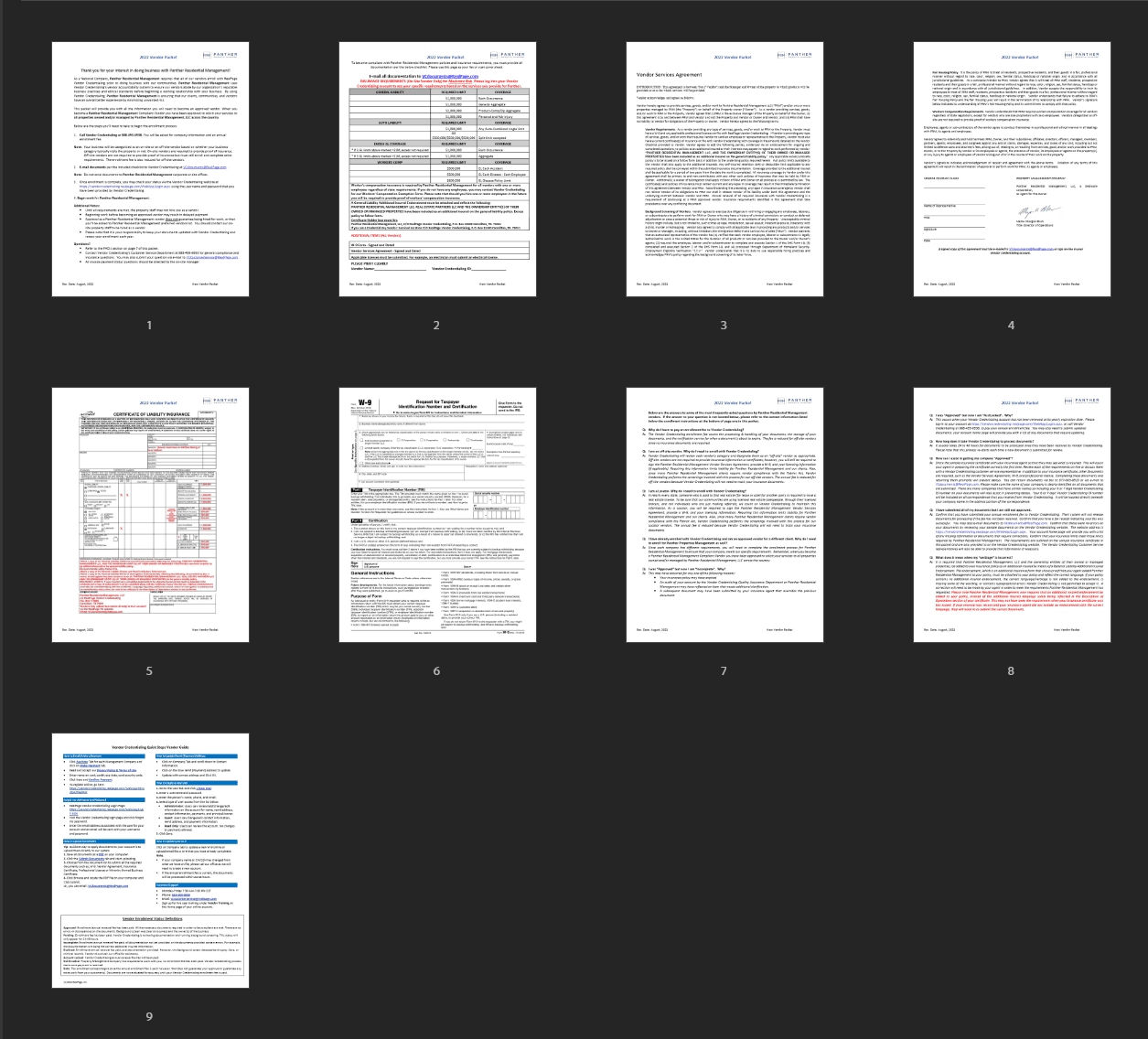
This is still the norm at many property management companies. A publicly available example from Panther Residential shows just how manual and paper-heavy the process typically looks.
The new way
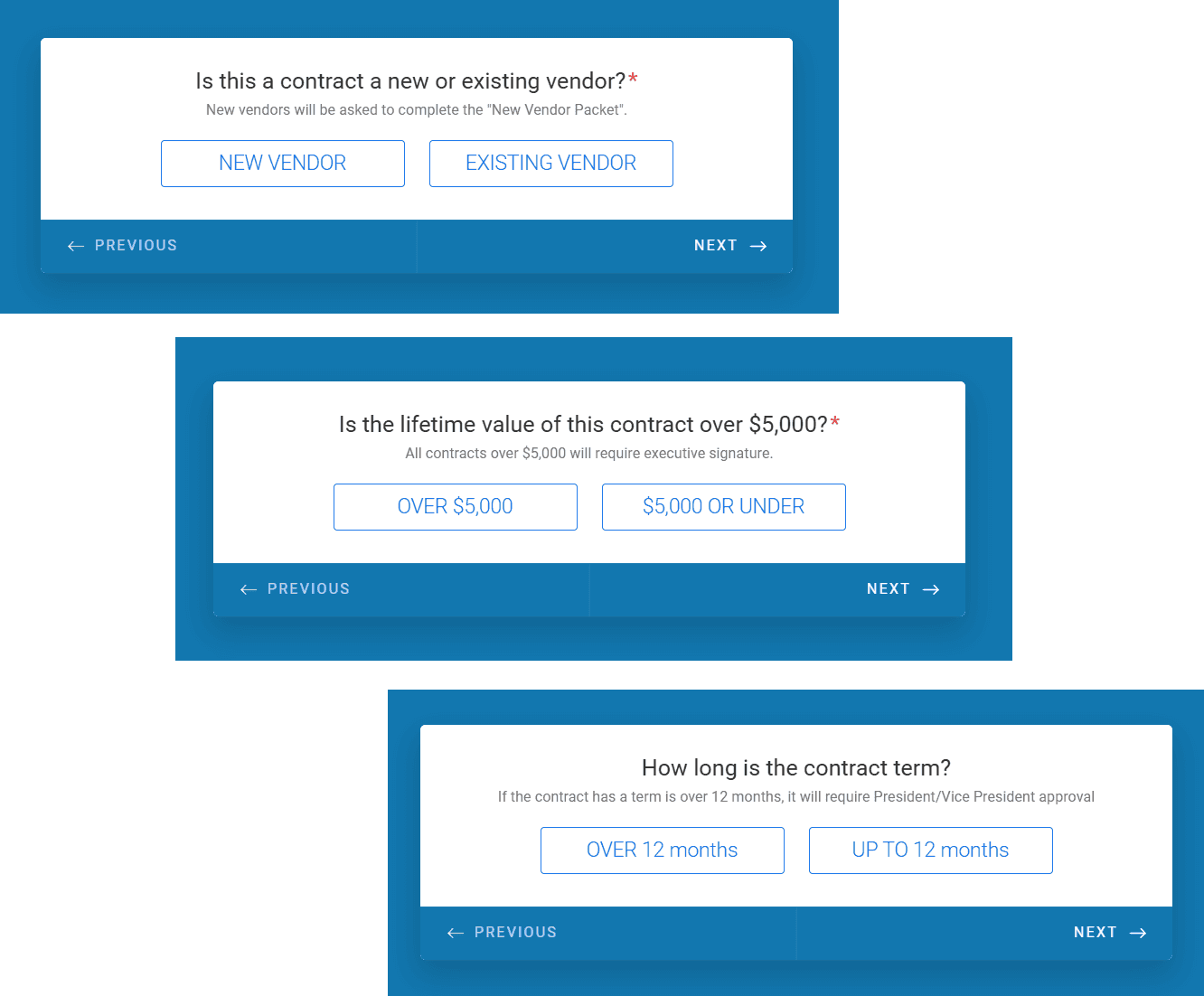
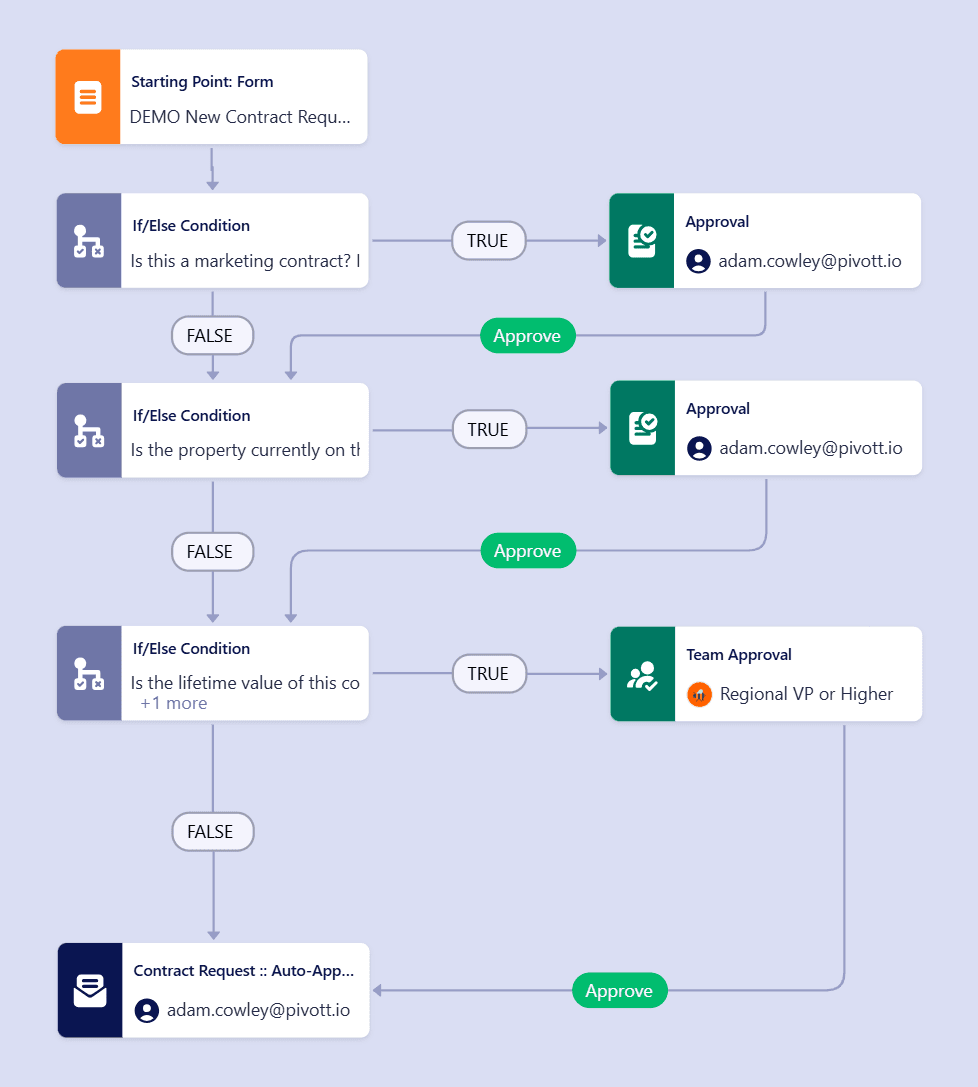
An automated workflow with logic built in. Instead of relying on manual steps that may or may not be followed, you give vendors and team members a structured process with:
- Mandatory steps that can't be skipped without a reason
- Validated inputs that are checked against your requirements automatically
- Conditional sections that can be skipped when they don't apply
How a standard approval workflow works
A typical contract or expenditure approval process moves through these stages:
- Request submission. The employee submits a request with details including the amount, purpose, and any supporting documentation.
- Initial review. A supervisor or manager reviews the request for completeness and checks it against the organization's budget and policies.
- Department approval. If the initial review passes, the request moves to a department head or financial manager who confirms the expense is justified and necessary.
- Final approval. A senior executive has final authority to approve or decline. This is typically reserved for requests above a certain threshold.
- Payment. Once fully approved, payment is processed.
Benefits of approval workflows
For multifamily organizations, well-designed approval workflows deliver several concrete benefits:
- Better spending control. All requests are reviewed and approved before funds move — no more unauthorized spend slipping through.
- Accountability and transparency. Every approval decision is logged, creating a clear record of who approved what and when.
- Reduced fraud risk. Structured workflows make it harder for unauthorized individuals to obtain funds or execute agreements.
- Faster turnaround. Automated routing and notifications reduce the back-and-forth that slows down manual processes.
Best practices
To get the most out of your approval workflows:
- Define roles clearly. Everyone involved should know exactly what they're responsible for — submitting, reviewing, and approving — before the process starts.
- Use a centralized system. Managing requests across email threads and spreadsheets is how things fall through the cracks. A single platform keeps everything trackable.
- Automate as much as possible. Routing, reminders, and validation logic should all run automatically. Manual handoffs are where delays happen.
- Monitor for bottlenecks. Track how long requests spend at each stage. If approvals consistently stall in one place, that's where your process needs attention.
Pivott has embedded workflows built specifically for multifamily — and our team does all the configuration work so you don't need to learn new software or build processes from scratch. Get in touch to learn more.
Ready to automate?
See how Pivott helps multifamily teams manage contracts, compliance, and vendor documents in one place.
Book a Demo